What Is the Book of Kells?
The complete history of the Book of Kells — the 9th-century illuminated manuscript created by Celtic monks, its journey from Iona to Dublin, and what makes it extraordinary.
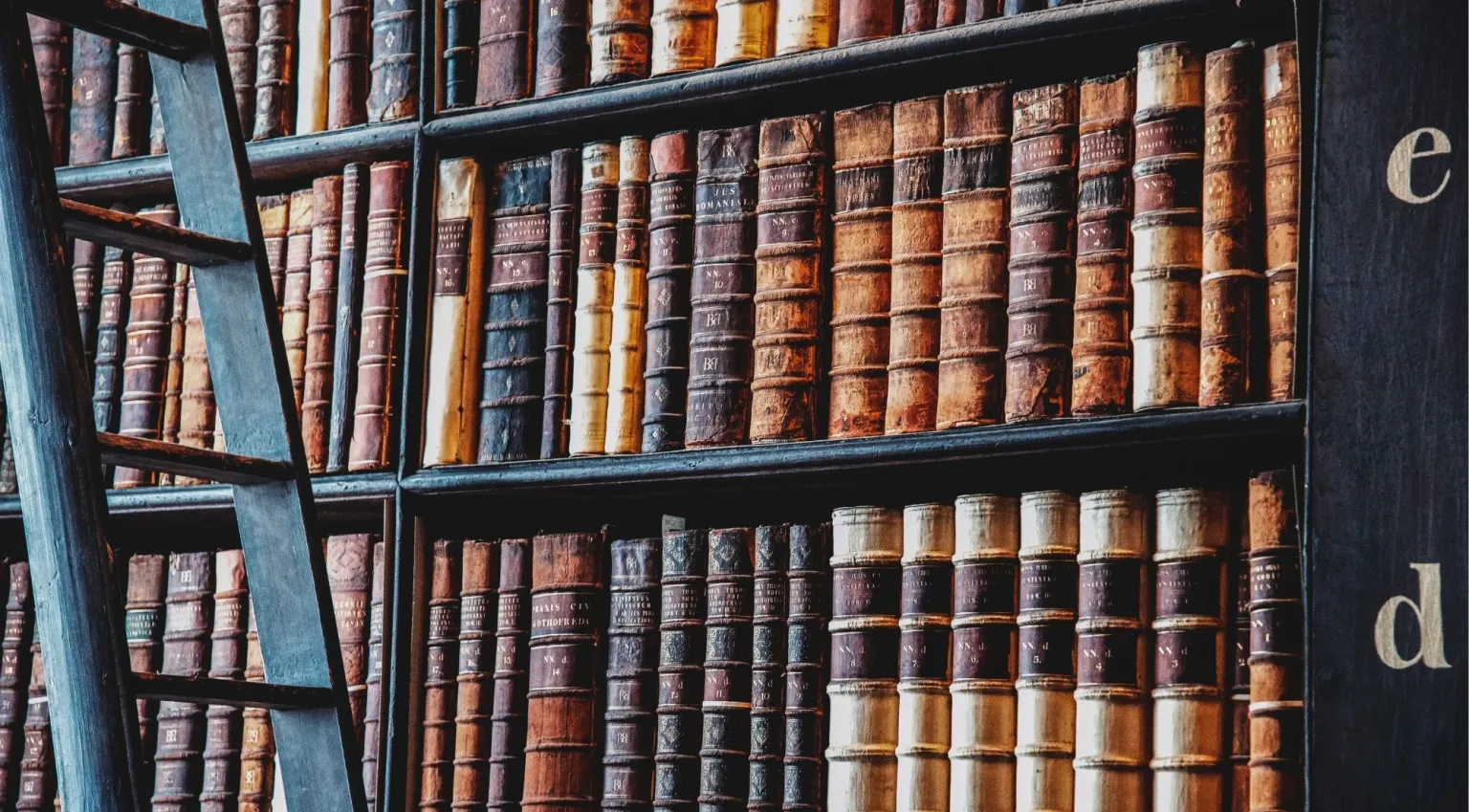
The Book of Kells is a Gospel book — a manuscript containing the four Gospels of the New Testament in Latin — produced by Celtic monks around 800 AD. It is widely regarded as the finest surviving example of Insular illuminated manuscript art, and one of the most important cultural artefacts of early medieval Europe. More than twelve centuries after it was made, it remains Ireland’s most treasured object and the reason well over half a million people a year visit Trinity College Dublin.
Origins: The Island of Iona
The manuscript was most likely begun on the Scottish island of Iona, home to a monastic community founded by the Irish missionary Colmcille (Saint Columba) in 563 AD. Iona was one of the great centres of early Christian scholarship and art in the British Isles, producing richly decorated Gospel books in the distinctive Hiberno-Scottish style now known as Insular art — a fusion of Celtic, Anglo-Saxon, and Mediterranean influences that flourished in the monasteries of Ireland and Britain between roughly 600 and 900 AD.
Around 806 AD, Viking raids on Iona intensified; one raid that year killed 68 members of the community. The surviving monks fled with their treasures — most likely including the unfinished manuscript — to the monastery of Kells in County Meath, Ireland, a daughter house of Iona’s community. The manuscript was completed there and takes its name from the town. This is why a book begun in Scotland is known to the world as the Book of Kells.
How It Was Made
The Book of Kells was written and painted on vellum — prepared calfskin. It took the hides of an estimated 185 calves to produce the roughly 680 pages, which tells you something about the wealth and organisation of the monastery behind it. Producing a single deluxe Gospel book like this was the work of years, involving scribes, artists, and the farms and workshops that supplied parchment, pigments, and ink.
The monks used a remarkable range of natural pigments, some sourced from extraordinary distances for the time:
- Lapis lazuli for vivid blue — a stone quarried in Afghanistan and carried thousands of miles along medieval trade routes
- Orpiment (arsenic trisulphide) for a bright, gold-like yellow
- Red lead and organic reds for orange and crimson
- Verdigris from copper for green
- Carbon and iron-gall inks for the black and brown of the text
That a monastery on the edge of the known world could assemble such materials is part of what makes the manuscript so astonishing to scholars.
The Art: What Makes It Extraordinary
What distinguishes the Book of Kells from other illuminated manuscripts is the sheer density and complexity of its decoration. The major illustrations — the Chi Rho page (the monogram of Christ that opens the account of the Nativity in Matthew), the Virgin and Child, the Temptation of Christ, and the full-page Evangelist portraits — are among the most elaborate single pages in any surviving manuscript.
The interlace knotwork, zoomorphic (animal-form) letters, interlocking spirals, and tiny human figures that fill the margins and decorated capitals are executed at a scale that rewards magnification: details effectively invisible to the naked eye resolve into precise, deliberate ornament when enlarged. Woven into the sacred imagery are small surprises — cats and mice, an otter with a fish, human figures tangled in the lettering — some symbolic, some apparently the playful signatures of the artists themselves.
The manuscript survives as 340 folios (680 pages), bound since a 1953 conservation into four volumes. Two volumes are on display in the Trinity College exhibition at any one time — one usually open at a major decorated page, the other at a page of text — and the pages are turned periodically, so no two visits show quite the same thing.
The Text and the Script
The Book of Kells contains the complete text of the four Gospels — Matthew, Mark, Luke, and John — in the Vulgate Latin translation of Saint Jerome, though with numerous readings drawn from older Latin versions, which hints at a complex textual history. The main text is written in a formal, rounded script called Insular majuscule, a hand that shaped the way the Latin alphabet was written across early medieval Europe.
Crucially, the Book of Kells was never primarily meant to be read. It was a ceremonial object, made to be displayed on the altar and carried in procession — a physical embodiment of the Word of God, in which the act of decorating each letter was itself an act of worship. Its function was as much devotional and symbolic as it was textual.
From Kells to Trinity College Dublin
The manuscript remained at Kells for centuries. It is first recorded in 1007, when the Annals of Ulster note that “the great Gospel of Colmcille, the chief relic of the western world,” was stolen from the church at Kells and recovered some months later, buried under a sod and stripped of its gold-and-jewelled cover — which has never been found. That missing cover is why the book survives today as pages alone.
In the 17th century, during the upheavals of the Cromwellian period, the manuscript was sent to Trinity College Dublin for safekeeping, arriving around 1661. It has remained in the care of the college ever since, and for generations has been displayed in the Old Library. Today it is shown in the Treasury, a dedicated exhibition space on the ground floor beneath the Long Room. As part of the Old Library’s current redevelopment, the manuscript will move to the restored Printing House on campus after 2027 — but it stays on public display throughout.
Seeing It Today
The Book of Kells Experience at Trinity College Dublin takes you through the Treasury, where the manuscript is displayed under carefully controlled lighting, then the Long Room and three digital exhibitions in the Red Pavilion. The panels explain the broad history, but they can’t tell you what’s on the specific pages open in front of you, or point out the microscopic details that make the artistry so remarkable. That’s where a guide changes everything — turning a five-minute glance at “something old and ornate” into a real understanding of what you’re looking at and why it matters. If you’re weighing your options, our guide to guided versus self-guided visits lays out the trade-offs.
Book a guided Book of Kells tour from €71, with fast-track entry and a visit to the Long Room included.
Book Your Book of Kells Tour
Join 2,200+ guests who rated this experience 4.6/5. Fast-track entry to the Book of Kells, expert guide through Trinity College and Dublin Castle, and free cancellation.
Check Availability & Book